Anyone who's been in my company for more than five minutes - and some might say that's still too much - will know that I am terminally obsessed with the Y2K aesthetic. The visuals, trends, fashions, tech music and general pop culture of the late 90's and early 2000's, the big, shiny chrome beacon at the end of the 20th century. This makes zero sense if you also know that I was born in 1992, far too late to be able to appreciate any of those trends in any capacity. By rights, I am a 2000's kid and should be into Frutiger Aero, Green Day or literally anything else that was out around the early 2000s. But nope, give me the drum and bass, give me the chrome and aqua, give me the vague appropriation of anime and manga aesthetics.
But nostalgia is a double-edged sword, and it's all to easy to swing it the wrong way and hack your own feet off. Looking back on stuff like this can give you a real insight into how trends in culture, art and society change over time, and it's fascinating to see what was considered fashionable back then and what that says about us at the time it was made. But then you get slapped in the face with some casual homophobia or racism and remember that oh, right, this was a different, not neccesarily good time. You have to take these things as a warts-and-all deal to fully appreciate them, otherwise there's a real risk of learning the wrong lessons.
That is, if there's even anything to learn from them at all. Which brings me to... this thing.
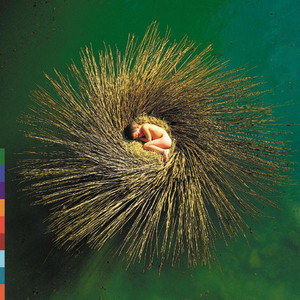
Full disclosure, I rewrote that opening spiel about three or four times because I had no idea how to approach this thing at first. Listening to this thing for over a week, parsing over each song, trying to wrap my head around the frankly bonkers narrative, I suspect that my feelings matched that of somebody like Cao Cao as he plotted his next great battle. I wonder if, like me, he ever considered reaching for a glass of wine to fortify himself.
Right, okay. Let me back up and just give a little context.
Penned by former Genesis frontman Peter Gabriel, OVO was created to soundtrack a Cirque du Soleil-style show performed at the Millennium Dome in London during the year 2000. The show, and by extension the album, is a high-concept affair dealing with themes of generational responsibility, overcoming prejudice, coexistence with nature, the shaky co-dependency of humanity and technology, grief, uncertainty in a changing world and hope for the future. All of this is told in the allegorical parable of three generations of a family on a fantastical island and their conflicts with another tribe as they struggle to ensure the ongoing survival of their fellow beings.
If all of that sounds like pretentious guff, then that's because it is. But we'll get to that in a minute.
I'm being a bit cheeky with this one, in all honesty. While I started the series to cover all the music that I delibaretly ignored as an angsty teenager, this one's going much father back. I was about eight at the time the Millennium Dome was a thing. I have vague memories of visiting the Dome maybe once for a Pokémon-related thing, although I wonder nowadays if those are fake, retroactively created by my own brain. I certainly never saw the show this album was penned for. I suspect that a lot of it would have gone over my head and I would have had zero understanding of it.
Listening to this now, I can state that kid me wasn't missing much.
Two things are working against OVO. The first is that it's a
soundtrack album, written with a visual element in mind, so listening to
it divorced from the context of the stage show is definitely not going
to bring across the intended experience. That's an unavoidable pitfall when you listen to any soundtrack album, of course - I love Kung Fu Panda 2's music, but part of that love comes from having it be paired with the on-screen action. It loses a lot if you haven't got the film in front of you, or if you haven't even seen the film at all.
But this is compounded by the
second thing, in that said intended experience is about as substantive
as a cotton wool life raft. The album progresses from sleepy folk music
to spine-tingling industrial to thrashing battle drums to new age
strings to probably the worst rap I've ever heard in my life, but so
little of it feels like it has anything real or profound to say. And I
sincerely doubt that watching a bunch of leotard-wearing performers
jumping about elaborate scaffolding is going to help fill the gaps.
And the second problem is the album's biggest handicap, because OVO is trying to say something. It's a concept album wearing the skin of a soundtrack. The entire structure, from track ordering to sound to lyrics, is telling a story, albeit an allegorical one. But the story on the surface level is complete nonsense to the point that I had to stop several times and nurse my forehead to make sure my brain hadn't tried to escape my skull. And even then, said story is just a vehicle for empty platitudes about mankind's place at the dawn of the new millennium, about as filling and meaningful as fairground candy floss.
But I get ahead of myself. Let's just take this thing track-by-track, as always, and see what we can make of it.
---
Low Light
I initially mistook this for an instrumental, but there are actually some spoken words in Irish Gaelic in here. This track, low-key and slow like a rising sun, works as an opener, giving a very "dawn of time" feel to ease you into the overall narrative, but you probably won't remember it by the time the album's over.
The Time of the Turning
Richie Havens and Allison Goldfrapp do some back and forth about the cycles of the seasons, agriculture and the steadfast hardiness of those who live in nature. It's fitting for the vaguely mythological/fairy-tale atmosphere of the album, but not that much of a standout. The chorus gets stuck in my head, though, which is at least something noteworthy.
The Man Who Loved The Earth/The Hand That Sold Shadows
The first major instrumental of the album, and it's... not good. Half of it is droning digeridoos punctuated by the occasional drum hit, and the other is an oddly-sinister whirlwind of timpani, flute and electric guitar that ends up being tonally jarring. It feels like two tracks hastily shoved together, regardless of whatever narrative it's trying to bring across.
The Time of the Turning (Reprise)/The Weaver's Reel
Two remarks. One: I feel it's odd to have a reprise so early in the album, and so soon after the track that it's reprising. Normally you'd want a fair distance between those. And secondly, I think this track's been named backwards - the segment I think of as "The Weaver's Reel" comes first, followed by the reprise of "The Time of the Turning".
Regardless, this song mostly picks up in the second half. We get something akin to an Irish jig or harvest festival with lots of fast-paced flutes, followed by sudden and frantic clattering drums as though something had gone horribly wrong. I definitely remember that particular drum beat from the commercials for the Millennium Dome - I wonder if they sampled this track for it?
Father, Son
Odes to fatherhood don't work on me. Mostly because my own dad was an alcoholic womaniser who sold me and my sister's GameCube for booze money. And mawkish, crooning songs don't work on me, either. Peter Gabriel going on about doing yoga with his elderly dad to a bare-bones piano and string backing fuses those two things into a something that I bounce off of like a golf ball bouncing off of an elephant's arse. Bad, bad track.
Call me heartless, but a song with a lot of personal relevance to the person who composed it can still suck. Even if you had a good relationship with your father, I can't see anyone un ironically enjoying this.
The Tower That Ate People
Okay, this is a track I like. After all the folk and woodwind, the sharp turn into industrial, with pounding, metallic drums and distorted flute, is a welcome relief from everything else that's come before. I've found myself bopping my head to this more than once on the walk in the park or on the train to work. Peter himself clearly isn't ashamed of this track either - it's
recurring on his set-lists and turned up in a few compilation albums.
And out of all the tracks, this is one of the few that remains surprisingly prescient in today's times. Between the concerns over the rise of AI and the increasing prevalence of social media in our lives the image of people increasingly becoming prisoners inside the tower, yet unable to cope without the shelter of it, only gets stronger. "Man feed machine, machine feed man", indeed.
Revenge
Filler instrumental with rapid-fire drumming meant to invoke a sudden battle or uprising. Skippable.
White Ashes
A slow, weird mix of wild calls and lyrics on the fall of the tower and the death of the one in control of it. Feels weirdly post-apocalyptic, more of a semi-sarcastic celebration of societal collapse than of true joy and relief. Still not that memorable a track.
Downside-Up
Another double-act song, this time between Elizabeth Fraser and Paul Buchanan, that muses on the sudden collapse of stability and upending of status quo. Again, nothing much to say, which is becoming a running theme of this review. I do have one thing to say about it, but that'll come later.
The Nest That Sailed The Sky
A weird, floaty instrumental spiritually akin to those binaural ASMR music vids you watch to help you go to sleep. I definitely don't hate this one - it's weirdly calming and pleasant, and I can definitely see myself turning it on for a few minutes when I'm a bit stressed out.
The Tree That Went Up
Yeah, trees tend to do that.
Sarcastic comments aside, I keep getting this one confused with The Nest That Sailed The Sky. And I have a distinct feeling that this track might be out of order with everything else. Really, this thing should come before Downside-Up, if we're going by the bonkers narrative that this thing is strung around. But when a lot of these airy instrumentals bleed together in the way they do, I suspect that the people putting this thing together didn't much care overall.
Make Tomorrow
A ten-minute encore from every performer on the album thus far as they appeal to the audience to actually go out and make the new millennium happen. Put down the distractions, figure out what mankind is worth. And while there's a definite poetry about this one that I can appreciate, ten minutes is too much time to spend beating the listener over the head with your album's final unifying thesis with the care and grace of a drunk clown with an industrial mallet. Maybe I need to listen to it a few more times for it to really resonate, but still, ten minutes. Ugh.
The Story of OVO
Ooooh, boy. This is what you all came to read.
See, I've been pulling a bit of a fast one on you all. The track listing I've been using isn't the one used by the album's public release. It's based on OVO: The Millennium Show, an alternative version of the album originally exclusive to the Dome. That version of the album has this track, a rap-based summary of the fictional narrative of OVO, as a separate disc. The public release removes the track "The Tree That Went Up" and sticks this track at the very start.
That was a stupid fucking decision for two reasons. One: The backing to this track is directly taken from "The Man Who Loved The Earth", so if you hear this track first, it makes the latter track come off as the derivative one and cheapens it. Two: this song fucking sucks. It's the lamest, frill-less, commercial rap I've had the misfortune to inflict upon my eardrums, with its unenthusiastic vocals punctuated by a droning "Ovoooo" chorus akin to a broken forgorn. There's no enthusiasm or energy, no lyricism, no care for the material, and given that the material reads like something a bored primary school kid would scribble out, can you blame them?
"Father, Son" just makes me roll my eyes - this one's genuinely embarrassing. Putting it at the front was a mistake and I hope the executive responsible for that idea steps on a Lego brick.
---
So... yeah. This isn't very good. A few redeeming tracks, but it's ultimately nothing. A smashing together of various disparate genres, attempting to tell a bonkers narrative that is essentially meaningless hoorays about mankind making it to the year 2000.
I don't know Peter Gabriel. I don't know his work, especially his post-Genesis stuff. And I highly suspect that you'd already need to be a fan to be into this any more than surface-level. Because I've seen people glazing this album online as though it was another work of creative genius from the man. As someone who's exclusively stuck with classic heavy metal, indie rock, 90's trance, gangsta rap and the wild card that is Gorillaz for much of his life, I just don't get it. And based on this album alone, I'm not in a hurry to check out more of this work.
But for all of that, I can't bring myself to hate this album. Yes, it has the worst rap song I've ever heard. Yes, it's narrative concept is akin to self-masturbatory candy floss. And yes, it's got its name attached to one of the biggest boondoggles in British history, an upturned salad bowl on the banks of the Thames. But there's things to like! The Tower That Ate People is a song I keep coming back to, and I'm even prepared to say that The Nest That Sailed The Sky and the middle of The Time of the Turning/The Weaver's Reel are enjoyable! Hell, maybe you'd like Father, Son - I sure as hell don't, but maybe you will!
I think, at the end of the day, OVO's only real crime is being a product of the manufactured 'Y2K hype' of the era. Like the Dome, it's what you get when somebody, either a corporation or government, tries to cynically sell you an idea of what a new millennium means, but hasn't got the first idea of what that idea actually is. And because they haven't, and because they need to appease as many people as possible, nothing they can sell you on will sound sincere in the least. No stance is taken other than "make tomorrow today", nothing that would exclude or offend.
The one saving grace of OVO is that, unlike the Dome, it was ultimately harmless enough that it didn't stick in the collective memory. And in that respect, it's lucky. It gets to evade the mockery and bitterness that still cling to the Dome, the tabloid headlines and political spanking. Nobody remembers the show and nobody remembers the music. But everyone will turn to each other, nearly three decades after the fact, and still go "Hey, you remember the Dome? What a load of old shite that was!"
I still love the Y2K aesthetic. And I'm still gonna snort that shit like the finest Columbian cocaine wherever I see it. But this thing, I reckon, is best left to gather dust on the nostalgia shelf.
Next time, because The Story of OVO offended me so much, I'm going to listen to some actually good rap (hopefully) with Outkast.