We're taking something of a turn with this review. Because I already sort of liked Gorillaz and had come around to them during the pandemic prior to my review of Demon Days. And I'd always thought fondly of The Killers in spite of not being as familiar with their first two albums.
Arctic Monkeys, though, I was always certain I didn't care for.
As a teenager, I didn't have patience for a lot of stuff. And one of those things I didn't care for was the sort of loud, drum-thrashing rock and roll of the time period. So the moment I heard Arctic Monkeys, I disliked them. Not hated them, that's too strong a word. I heard it a lot, and maybe there were one or two songs that I liked, but most of it just completely bounced off of me. It just wasn't a sound that I took to, and it's been that way for the longest time.
But I'm thirty-three at the time of writing this. And in the vast gulf of time between then and now, I managed to understand that something can be good even if I personally don't much care for the IP, the genre, the sound, whatever it is that turns me off. So the purpose of this review is less about proving my teenage self was an idiot and more about finding out if, now that I have that ability, I might actually like Arctic Monkeys now.
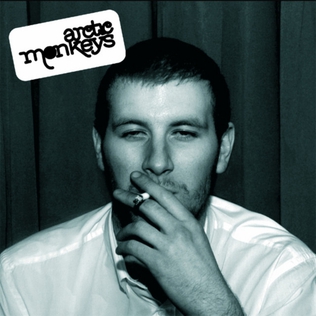
One advantage of being older is that you can actually think to look up the context and history of media you experienced when younger. When you're a teenager - and especially if you're a particularly shitty teenager like I was - you might not care for any depth and can only appreciate things on the surface level. But as an adult, I can admit I didn't know that much about the people behind the band and did a little research before diving into this.
And quite frankly, if the fact that these guys got famous by sharing their singles via MySpace isn't a fascinating story, then I forgive you, because who the fuck thinks about MySpace nowadays? But the point is, it's an incredibly smart move. Taking advantage of the internet, which was quickly growing in versatility and popularity at the time, and spreading by online word-of-mouth tells you everything you need. These guys are clever and passionate about what they do. They don't ask for record deals, record deals come to them. They're not doing this because they want to be famous or rich, they do it for the craft.
Which, in a world that teeters violently on the edge of anarchy as the bloated elephant of capitalism paws uselessly at the steering wheel, is to be appreciated. There's no pretention about them - they're not going to waste time writing soppy, metaphor-riddled love ballads when they could be smashing out a loud dance-floor sensation or introducing you to more local slang. Even if you don't like the music, you have to appreciate that at the very least.
The whole idea of "working man's music", the kind of tunes and lyrics about what the average joe goes through, isn't new. But Arctic Monkeys, arguably, managed to breathe new life into it by doubling down on the core concept. They're unapolagetically loud, honest and Sheffield. Their songs are all about coming home drunk from a party, getting chewed out by a moody partner, reminiscing about lost youth, complaining about the townies that turn up to ruin your Friday night. Hell, their first album, Whatever People Say I Am, That's What I'm Not, is damn near a concept album revolving around hazy memories of drunken nights at the club, on the pull or nursing headaches from the night before.
We've all been there, which is why we relate to music like this. As somebody who spent four years in Sheffield studying for a useless degree, I very much relate - a lot of my night-outs ended in similar fashion. But how does said first album hold up, twenty years on? And does adult me appreciate these songs a lot more than teenage me did? Let's take a look.
---
The View From the Afternoon
The band introduces themselves by sarcastically commenting on how they might not live up to the hype, in the same way that an average night out on the town might not. A good stage-setter, but drags a bit too long for me.
I Bet You Look Good On The Dancefloor
One of the band's signature tracks, a high-energy headbanger encouraging the listener to not be a wallflower. Naturally, since this is one of their biggest hits, it's one that I've heard a fair amount already and grown to like.
Fake Tales of San Fransisco
A story of people getting fed up at a shitty concert held by a poseur weekend band. Good tune and also quite funny.
Dancing Shoes
A classic story of going out on the town, seeing a girl you fancy the look of and then completely bottling out of making the first move. We've all been there. Unfortunately, I don't find the song itself that engaging.
You Probably Couldn't See Me For The Lights, But You Were Staring Straight At Me
One of my biggest pet peeves in anything is when people give things obnoxiously long titles for no apparent reason. Therefore, as you can imagine, I fucking hate the title of this song. It's a good track, no real comments to make, but did nobody ask the band to take some pruning shears to that thing?
Still Take You Home
No real notes on this one, either. A ditty about how even an average person looks great after you've had a can or two and their features are obscured by laser lights.
Riot Van
We've all been to parties that went south because the police showed up. This is one of those moments - a sobering, low-tempo and quieter track that encapsulates that cold-water-to-the-face "oh shit" moment when the bastards in blue rear their ugly heads. A good change of pace and put at a good point in the album, but definitely a filler track more than anything.
Red Lights Indicate Doors Are Secured
The album pivots here slightly, talking about the aftermath of a night out instead of the night itself - the banter, the drunken arguments, trying to figure out how to dodge paying for the taxi home. By the time the gang gets their brain cells lined up, it's too late - the doors are locked and they have no choice to ride out their mistake. If you've ever embarrassed yourself in the aftermath of a clubbing session, you'll totally get this one.
Mardy Bum
Another Arctic Monkeys signature songs, a more pop-ish affair (aside from the bridge) about the struggle to communicate with somebody who's naturally argumentative and moody, feeling like you're just going through the motions over and over. Ended up introducing a lot of people to Yorkshire dialect words, which is always fun.
Perhaps Vampires Is a Bit Strong But...
Arctic Monkeys frontman Alex Turner and drummer Matt Helders, in an interview, talked about how condescending the people around them in their hometown were, asking how much the band was making on their early gigs. And now that they're famous, those selfsame people, who clearly had no faith in them or understanding of why they were doing what they did, are now dick-riding and claiming they always supported them. So this song is very much a sardonic "oh, now you support us" from Alex and Matt. Good stuff.
When The Sun Goes Down
The #2 single from the album, a reflection on the darker side of Sheffield nightlife. Sex workers used to ply their trade around the studio the Monkeys practised at, and Alex can only muse on what he sees from his window - his pity for the women who are doing it, his contempt for the scumbag pimps, his mocking disdain for the regular customers in their Ford Mondeos. Its easy to overlook these lyrics, though, because the song is a damn banger from beginning to end, with a natural rise and fall at each end and nothing but high energy in the middle.
From The Ritz To The Rubble
A nice filler track abnout getting turned away from the big, fancy club, only to have a more productive night out at a more down-market local. Just goes to show that you can have fun without going to the places that demand you empty your entire wallet just to get through the door.
A Certain Romance
I find it rather odd that one of the more layered tracks of the album ends up being at the end. It's simultaneously a dig at the belligerent, drunken chavs who suck the soul out of partying and a swipe at the music industry for churning out artless guff designed only for ringtones. And yet, at the end, the singer admits that he can't be too mad, because some of his best friends fit the stereotype too in both categories. Makes me wonder who in the music industry he was pals with for that kind of commentary.
---
I walk away from this album reassured that Arctic Monkeys are, in fact, good. Perhaps still not my cup of tea - the repeated use of loudly-crashing drums grates on my nerves when I just want to listen to the guitar or vocals, and said vocals often get a bit too close to Oasis levels of slightly annoying for my tastes. But I can definitely see how they exploded, how people latched onto them. And I can definitely point to more than two songs on this album and say "yes, this is good" if people ask me about it.
Maybe in future, I'll look up their second album and see where it takes me. Maybe I'll like this more than the first one, in accordance with the law of sequel quality. Maybe it'll be more of the same. Who knows? That's a question for future me, and honestly, fuck future me; he's had something against me ever since he started getting alcohol cravings.
Next time, I either talk about Outkast, of whom I only know one song, or an obscure concept album from the year 2000 that only appeals to me. Flip a coin.

No comments:
Post a Comment